
Today is Ivan Illich’s 100th birthday, and I should be doing a lot of other work, but I found that I had to spend the day with him, even though he died in 2002. Quite apart from the importance his thinking has had for me, he was just three months younger than my mother, Ellen King, who is still alive, and the connections between their experience as contemporaries is significant for me. I realise that for me he is actually something of a hero, which is a bit of a surprise to me, I grew up with the Stranglers’ ‘No more heroes any more’.
Like many thinkers of the mid-20th century, he has largely been forgotten by generations brought up on neoliberal post-modernism. In fact, just last weekend I mentioned him to someone from the excellent Solidarity Economy Association, who are very much doing his work, but who had never heard of him. The Italian philosopher Giorgio Agamben has said that Illich is now ‘reaching his hour of legibility’ again after some decades of forgetting, and while it is certainly true that his critique of technocratic capitalist modernity is needed now more than ever, I’m doubtful whether many of today’s young social justice warriors could understand him.
But I’m already, as is my wont, straying into the political, when today warrants reflection on the man, so I will leave the main political/philosophical discussion till the second half of this piece. But separating the two is of course impossible: never was it more true than in the lives of those who lived through the mid-20th century that the personal is political. But I am very much bearing in mind the caution his biographer, David Cayley gives in the intro to his book about attempting to pin down the human being. This is really just some ideas, it focuses on what is generally little more than a footnote in writings about him, his life as a Jewish man. To some extent, this is a small protest at Christian thought hegemony concerning him.
I think his life makes it impossible to simply wish him a happy birthday, so I have settled for ‘sad-happy birthday’. What first came into my mind for a title was ‘A Damaged Life’, which is the subtitle of Theodor Adorno’s book of philosophical fragments, Minima Moralia. Self-contradiction was strongly there in both of these men’s lives and so in that spirit, I, a militant AI rejectionist (and so would Illich and Adorno have been), will quote from Google’s AI summary which actually really does capture something succinctly:
Meaning of “Damaged Life”
- Exile and Trauma: Adorno wrote the book largely between 1944 and 1949 while living in the United States, reflecting on the catastrophe of World War II, the Holocaust, and his displacement from Germany. [1, 2]
- Complicity: The phrase implies that under advanced capitalism and modern systemic coercion, no individual’s life or thought remains pure; even private experiences are scarred by collective violence (my italics). [1, 2]
- Resignation vs. Critique: Adorno used the fragments to argue that critical thought must persist as a “science of mourning,” refusing to surrender to totalizing social systems even when true freedom feels blocked. [1]
All of that could have been written about Illich, and there is academic literature which relates the two men. My view is that while his philosophical style was quite different, the Frankfurt School certainly had space for a bunch of very disparate thinkers, and Illich might have been one of them, had his life not taken a different path entirely. I like to think that, had he been in Adorno’s position in 1968, he would handled the contradictions a lot better than Adorno who, facing an invasion of his academic sanctum by militant students, sadly called the police.
The critical damage in both of their lives of course was, as Jews, having had to flee for their lives from the Nazis. First, to be clear: the fact that his mother was born Jewish, makes him a Jew as far as we are concerned. His religious convictions are irrelevant to that. He could have been married in a synagogue or buried in a Jewish cemetery. This is a critical difference between Judaism and Christianity, there are plenty of Christian Jews in the world. And he had that experience of many people with Jewish heritage in his youth, that his religious beliefs didn’t matter to the Nazis, either. To me he looks and seems obviously Jewish, and it’s not just the nose. He is one of my boys.
The first guess I will hazard is that his own direct experience of anti-semitism in 1930s Vienna, including the horrible incident where he was dragged up to the front of the class in order to exhibit his Jewish nose, had something to do with his decision to become a Catholic priest. I am not suggesting here that he was in flight from his Jewish identity, as many Jews were after the Holocaust. He was raised as a Catholic, and we don’t know how much of a Jewish identity he ever had, although he obviously never forgot. Rather, it is that the Holocaust had such a shattering effect upon the religious faith of so many Jews and Christians, and also upon atheists’ hopes for humanity. And he was obviously such a bright and idealistic young man. I can imagine that an unconscious motive might have been to redeem something, to choose a tradition of love that seemed sorely lacking in the world at that point.
And to find a home? Cayley has much more to tell us about Illich’s outsider and homeless tendencies, including his realisation after the Anschluss, when he was only 12, that he would in future, never have a real home. We have his later rueful self-description as ‘a Wandering Jew and a Christian pilgrim’. Cayley dwells considerably on Christianity and pilgrimage in chapter one of this book. Yet to me, in relation to a victim of Nazi persecution who lived in that period when Jews were, as so often in our history, forced to wander the globe in search of a home, ‘a Wandering Jew’ is almost unbearably poignant.
Illich says that the best response to the Holocaust is silence, and such was his insistence on his own privacy that, as with the Holocaust as a whole, he may have felt that his feelings were not to be expressed in words, even to his best interviewer and friend.
This response of silence in the face of the Holocaust, given the inadequacy of words, is shared with other intellectuals of the period, such as the Jewish literary critic, George Steiner. Of course, although I don’t know whether he ever says so directly, it’s not hard to see his critique of industrial society as partly being founded upon living through some of industrial modernity’s greatest horrors, the Holocaust and Hiroshima. Much post-war philosophy (not just that of the Frankfurt School, there are also links through Levinas, Derrida and even Foucault to poststructuralism and post-modernism), was a response to the Holocaust as a horror of Western technocratic civilisation, and I would say that the failure to continue that, and the way that some of those responses have been distorted, has a lot to do with the mess the world is in right now.
Amongst Cayley’s material on Illich’s outsider tendencies is a story about his involvement in resistance to the Nazis when in Italy:
‘Because of my Jewish mother. I was cast into the role of outsider under Hitler, I had to go underground at the age of 17…… ‘It was not tremendously heroic activity, but since then I have always been rooted on the outside. Resistance came natural. And it stayed natural.’
Nothing can be clearer than this, and it is the story of Jews in general in European history, the reason why so many of us become political radicals and social critics. In my view, this is what gives to his work that sharp outsider edge, and to him that quality of the Hebrew prophet, shouting in the wilderness, willing to stand up to everyone for the sake of the truth. How could such a man be expected to stay within the confines of the dogmatic Catholic Church? Indeed, true to his intellectual determination to follow things to their roots, in his later work his central idea became a rejection of the way in which the Catholic Church, in seeking to turn Jesus’ idea of love for humanity into a set of rules that people must live by, actually invented the coercive bureaucratic institutions of modernity that he hated, as do I. It is, again, to me, sad to see his perpetual camping on the margins of the university, unwilling to be swallowed by it and in the 1980s and 90s, wandering the earth alone.
I will extend this line of thought just a little further, though I know this is thin ice. I think people will be familiar with the concept of internalised oppression, the way that oppressed groups tend to internalise and believe the messages of the oppression, and can develop certain common personality traits as a result of the history. This is what gives us stereotypes, which we need to be very careful with, because they often reinforce the oppression. And yet those stereotypes are sometimes not based upon nothing. I don’t know what of Jewish culture his mother passed onto him, but there are intangible things that get passed on unconsciously on both sides but are detectable if you know what you are looking for.
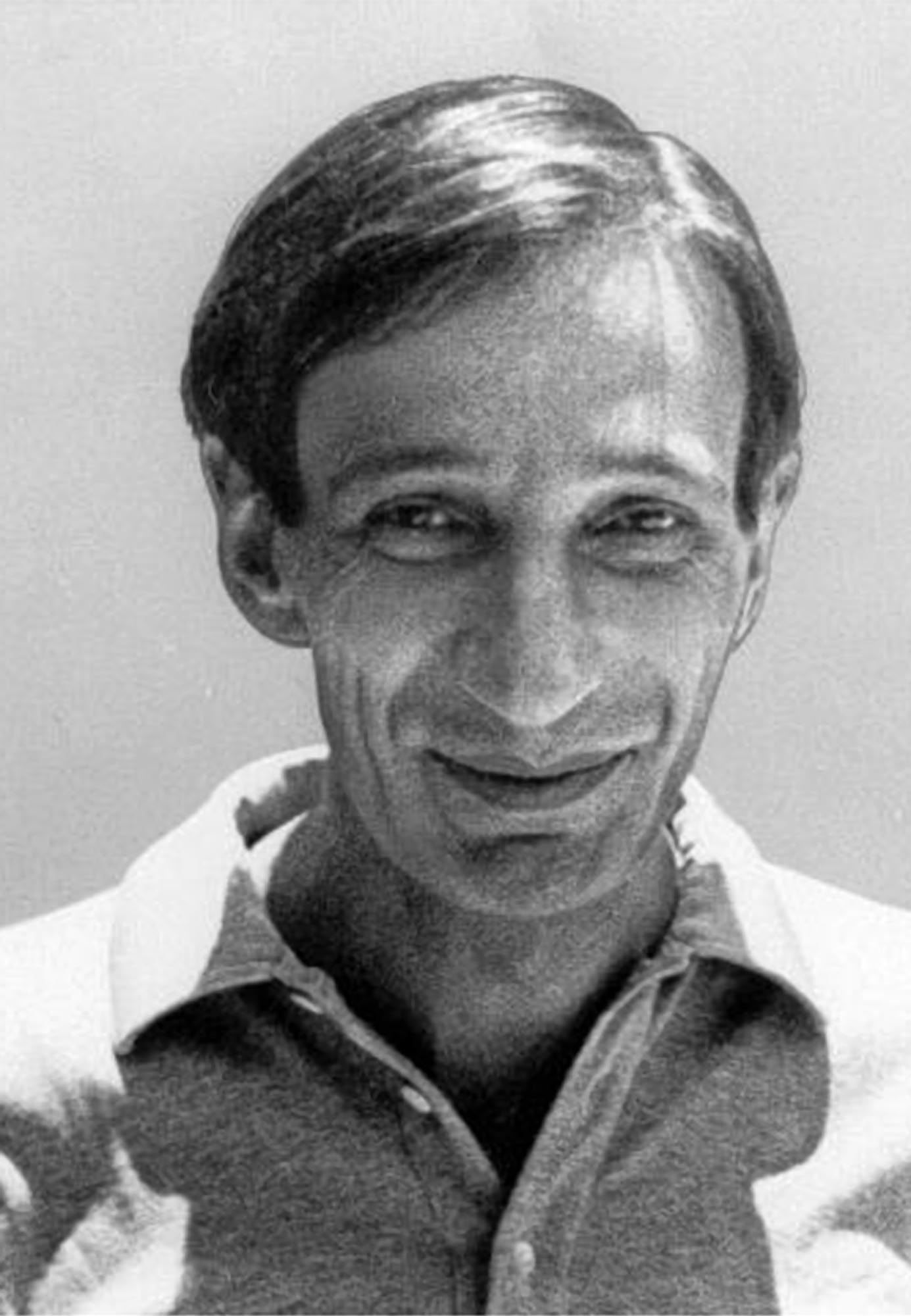
His style often seems very over-assertive, sometimes extreme, and he is accused by feminists of arrogance. To me it feels that this has a lot to do with being an outsider, and needing to shout, he is sometimes a bit like a Hebrew prophet, shouting in the face of the corrupt and complacent people. But it also I think has to do with the experience of Jewish men. Part of the oppression is that Jewish men are not ‘real men’. We can become rather shy and insecure as we grow up among rough boys. I am particularly fond of this photo of him when he must have been about 30; the expression of rueful, shy self-consciousness in his smile seems to me to fit what I’ve been describing. European Jewish culture is much more about intellectuality than robust physicality. Zionism tried to change that, and while we can understand that, the results are not looking very pretty at the moment. But there is one area where many of us Jewish men feel very secure, the realm of ideas, and we can overcompensate by being rather excessively assertive in that realm.
Another way in which he is like a prophet, is his courage of his convictions, which showed up not just in his readiness to confront the Catholic Church, but in his efforts to really live up to the part of a Catholic priest, whose task is to love humanity. Illich knew how to walk the walk, and this drew main people to him. He made friendships with many very different people and indeed acquired a small cult around him, especially in his brief period of intellectual superstardom in the 1970s. His willingness to act on his deep belief that the modern doctrine of avoidance of suffering is actually part of the problem, his critique of medicalisation, was tested in the most extreme way when he developed a large tumour on the side of his face in his last years. Refusing medical treatment, he controlled the pain with morphine, until it finally killed him. I can’t help but think that he was partly sustained in that by his Jewish outsider stubbornness.
All of which goes to say that in understanding the man and his work, you may need to look beyond Christianity, that it’s hard to understand him and his work without thinking about him as a Jewish man and about the Holocaust. For myself, what I want to say about him, it’s one of the highest compliments among Jews, is that he was a real mensch, which simply means a decent, good man, a man who does the right thing. I am sad not to have met him.
Part two: the politics
‘The transition to socialism cannot be effected without an inversion of our present institutions and the substitution of convivial for industrial tools. At the same time, the retooling of society will remain a pious dream unless the ideals of socialist justice prevail. I believe that the present crisis of our major institutions ought to be welcomed as a crisis of revolutionary liberation because our present institutions abridge basic human freedom for the sake of providing people with more institutional outputs. This world-wide crisis of world-wide institutions can lead to a new consciousness about the nature of tools and to majority action for their control. If tools are not controlled politically, they will be managed in a belated technocratic response to disaster. Freedom and dignity will continue to dissolve into an unprecedented enslavement of man to his tools.’
I begin this section of this essay with this critical passage from Illich’s Tools for Conviviality, because for me as an activist on the politics of technology for last 35 years, it is the one of the best summaries of the importance of, and both the difficulties and possibilities of that politics I known of. I have been involved during this time in efforts for the political control of ‘tools’, although I think that the use of the word in relation to most Western technology is a mistake – they are better seen as coercive systems that use us. But I also use this quote because because it shows Illich’s thought at its best in handling the tensions of modernity. And that is what makes of him critical importance, in our current moment. That and something much more practical, which I will come to.
This is Illich in his outspokenly iconoclastic socialist and even anarchist period of the early 1970s, when his name was known to every radical in a way similar to that of Herbert Marcuse. Not suffering from a shortage of chutzpah, the book that made him famous, Deschooling Society, was an assault on that most modern of holy cows, education, or more strictly schooling. It made him tremendously popular in anarchist and children’s liberation circles. It was part of his critique of the Western modernising ‘development’ paradigm which again made him very popular in Third World liberation movements. Later he went for perhaps the ultimate techno-progressivist holy cow, high-tech medicine, arguing that Western medicine in both very direct literal ways, and more subtle but equally profound social and cultural ways, was not only harmful to health but was undermining people’s and societies’ ability to deal with ill-health and suffering themselves. Ironically, it was this critique of medicalisation that became his only book that ever made him money, because it was taken up as a standard text in medical schools which at that point were trying to recognise the potential harms of what they were doing.
This period of the 70s was one in which, following the counterculture of the 1960s, it was possible to combine the desire for socialist liberation with a deep critique of technocratic modernity, and its notion of progress through technology. And as noted above, this is the very same critique, and the same tension that was the focus of the Frankfurt School. Adorno and Horkheimer’s classic Dialectic of Enlightenment, is about the Holocaust and totalitarianism in general as manifestations of technocratic, bureaucratic reason. Their best solution was to call for a rationality and an enlightenment that applied its tools of critique to itself, but not one that abandoned rationality and progress. It is there too in Orwell’s Nineteen Eighty Four, with his notion of the past as a resource for resistance to the totalising present. Illich’s key concept is balance – a key chapter of Tools for Conviviality is entitled ‘the multiple balance’.
He was not a simple ‘radical traditionalist’ as one school of Illich interpretation says. For example, he lost his job as the rector of the University of Puerto Rico for taking the side of the modernising government that was proposing birth control programmes, despite the vehement opposition of the Catholic Church. And this is an example of the difficulties of holding the balance, because that campaign of birth control in Puerto Rico became a major mid 20th century example of eugenics, with sterilisation operations targeted at the poor.
Sometimes he entirely dropped one of the balls. In his early 80s book Gender, rather desperately seeking for a counterweight to neoliberalism and technological accelerationism he argued for a return to traditional gender roles which not surprisingly led to him being exiled from the progressive academy by outraged feminists. This was an episode of what is now called tone deafness, and it should be noted that the core of his argument was not traditional patriarchy, but an anthropological insight that in all traditional societies the fundamental structure is a binary of women’s work and men’s work. Even though what different societies consist of as men’s and women’s work varies very radically. But by appearing to call straightforwardly for a return to traditional patriarchy he made himself irrelevant to the social movements trying to grapple with the contradictions. It didn’t help that he was a Catholic priest.
If we fast forward 50 years until the present, we can see what the failure to hold those contradictions in tension without rushing to resolve them has brought us. It has given us a neoliberal technological and technocratic triumphalist progressivism that has brought us to the verge of total cataclysm for humanity; and in the prospect of geo-engineering we can exactly the kind of ‘belated technocratic response to disaster’ that Illich was speaking of. On the other side it has given us a reactionary populism that is already producing the kind of manifestations that blighted Ivan Illich’s childhood. And an idiot culture war between the two. And because the left has largely forgotten those 20th century critiques of technocratic modernity, it has ceded that political ground to the right, with disastrous consequences for its own ability to really understand and get a grip on the crises we face, and to connect with people.
The severely practical way in which Illich can help us is in his knowledge and remembrance of other ways of life than industrial ways, and even his misconceived Gender book can help us there. We live on the edge of collapse of industrial society, and we stagger from crisis to crisis. At the heart of his work is the understanding of the way in which ‘industrial outputs’, from standardised knowledge, food, culture to buildings, transport, etc, systematically undermine people’s innate ability to learn, subsist, build their own houses, bury their dead, heal themselves etc.. But also an insistence, that we will very much need in the coming decades, that we can still do those things and return to those ways as the apparently overwhelmingly powerful, but actually extremely fragile, industrial bubble pops. In place of technologies that standardise life, undermine community and create dependency, he proposed human-scale convivial tools (literally technologies that foster living together) that put the human in charge of the tool and so preserve freedom, foster community and allow community-based self-reliance. Against the industrial and standard he always championed the local, the traditional and particular, what he called the vernacular – that which is produced organically in living human communities.
There is much more to be said about the thought of this immensely complex and erudite man, but this is already too long and I want to post it today on his birthday. I hope it will help you remember him, or if you are new to him to seek out one of his books and learn. We need him now and there are not many like him around these days. There are plenty of clever academics, but not so many who, out of their damaged lives, preserved a love for humanity that we really need in this time.


